SAIAN

POSITIVITY

dasha saian

Showing posts with label scrub. Show all posts

Thursday, August 4, 2016

Supercharge Your Beauty Routine - Almonds 4 Ways for Your Skin Health!

Those who know me well, know I am absolutely obsessed with raw nuts, seeds, dried fruit, and berries! In fact, I always keep pumpkin seeds, chia seeds, hemp seeds, and a variety of nuts in the house, and pack them in my bag daily for easy work snacks. And don't get me started on airport food - it's just the worst! I'm on an airplane every weekend for work, so eating healthy can be challenging. This is why bringing my own snacks has become a habit, in my book. 
Almonds are one of the most easily accessible type of nuts - you can find raw almonds in any local grocery store, at gas stations, and convenience stores, but don't let that fool you - they are a super-food! Almonds contain Vitamins B2, E, Phosphorus, Magnesium, Manganese, and Copper. Most importantly, a ¼ cup serving contains 49% of your recommended daily allowance of biotin! What's Biotin? Biotin, is also known as B7, is vital for the proper functioning of the nervous system and musculature and in maintaining cellular processes like growth, metabolism and energy. It is frequently referred to as the "beauty vitamin" because of its restoring properties on the skin. When we lack Biotin, our skin is the first to show the signs of deficiency. According to the Dermal Institute, these are the symptoms of B7 deficiency:
  • Red, scaly rash around the nose, mouth and eyes.
  • Thinning hair, sometimes with shedding and loss of pigment (graying hair).
  • Possible depression, fatigue, hallucinations.
  • Tingling sensations in the arms and legs.
  • Muscle cramps after exercise.
  • Possible high cholesterol and heart problems.
  • Cradle cap, a type of seborrheic dermatitis of the scalp, head and eyebrows. In babies, crusty yellowish-whitish patches appear in these areas and may or may not be itchy.
  • Increased risk for developing other health issues
Sounds like we want to keep healthy, and avoid any skin problems like this, right? I bet you didn't know this, but you can incorporate almonds into both your meals, and your skincare routine. I will show you 4 ways to do this, today! 

1. Incorporate Almonds Into Your Diet
Don't be confused by uneducated people telling you that consuming nuts will make you gain weight. Numerous studies have shown that incorporating unsaturated fats (such as nuts and avocado) actually helps stabilize weight. 

A 28-month study involving 8,865 adult men and women in Spain, found that participants who ate nuts at least two times per week were 31% less likely to gain weight than participants who never ate nuts. Among the participants who gained weight, those who never ate nuts gained an average of 424g more than those who ate nuts at least twice a week.

A serving of almonds has 162 calories, 14 grams of heart-healthy unsaturated fat, and 6 grams of protein. Remember, one serving of almonds is 23 almonds, which equals 1 ounce, ¼ cup or about 1 handful. Portion control is key. I also highly encourage you to stay away from processed nuts - I, personally, avoid any roasted, salted, flavored nuts at all costs. The best way to eat them is to sprout them. 

Sprouting or soaking nuts removes the outer shell, which contains phytic acid. Phytic acid is a naturally occurring botanical substance, it a strong chelator to the most essential minerals such as zinc, calcium, and iron. Whenever you consume nuts with phytic acid present (with the shell on, essentially), those nutrients will be removed, and not used by your body as they were intended to. When you soak and sprout the almonds, not only will you remove the outer shell, and the physic acid, but you will also increase the amount of active enzymes in the nuts - making it more easily digestible for those who experience stomach issues during digestion.

2. Use An Almond Scrub
Have you heard about microbeads? If not, I'd like to educate you on these little plastic culprits, and make sure you stay away from face and body scrubs which list them as an active ingredient. Microbeads are tiny round plastic beads that are found in some exfoliating products, and they are causing quite a stir in the environmental world. The plastic waste caused by these microbeads, which are not filtered out during sewage treatment, is damaging water ecosystems and killing marine life. 

A 2013 research at the University of Wisconsin-Superior showed that there were 1,500 to 1.7 million plastic particles per square mile in the Great Lakes! Not only are the beads damaging to fish, they are also bad for your face - microbeads can cause eye irritation, and promote rosacea and couperose. It’s no wonder that Illinois was the first state to ban the use of microbeads in June of 2014, and I sincerely hope all other states will quickly follow.
Instead of using these plastic beads, I suggest natural options like scrubs with ground up almonds, seeds and stone pits from apricots/peaches, crushed walnut husks, oats, coffee grinds, salt, and sugar. I especially recommend sugar for those dealing with eczema since it’s non irritating on broken skin, and sea salt for psoriasis sufferers, but not more than once a week. All other scrubs can be used 3 times a week, but not more - our skin needs adequate time to amass dry dead cells, and you definitely don’t want to over-exfoliate!

3. Use Almond Oil as A Body Moisturizer
Did you know that different vegetable oils rank differently against each other when it comes to how much they clog the pores? Oils rank from 0-5, a 0 being least comedogenic, and 5 as most comedogenic. ("Comedogenic" means tending to cause blackheads by blocking the pores of the skin.) Almond oil is an amazing 2 (moderately low) while Coconut oil is a high 4, rendering it a bad choice for skincare. Almond oil can be used as a hair moisturizer, a body moisturizer, and a wonderful massage oil.

4. Use Almond Milk as An Activator For Powder Masks
Who says you can't play with your food? I love the idea of incorporating almonds in every step of the beauty routine. Almond milk is gentle and soothing on the skin, which makes it a perfect activator for  powder enzyme masks. Simply mix the powder with a bit of warm almond milk, and apply to the face for 7-10 minutes. The result is a bright, supple completion! Using this mask helps to pull out oils, exfoliate, and reduce the appearance of sun damage, wrinkles, cellulite and even stretch marks. It's perfect for blemished skin, blackheads and even cystic acne, and excellent for soothing skin conditions such as rosacea, eczema, rashes, psoriasis, and acne.
Did you like these cool suggestions? I had a blast putting these ideas on paper for you, and I hope I inspired you to start something healthy today! Read more about almonds here and check out nuts.com for nutritious snack ideas that include almonds!

Tuesday, July 21, 2015

Adding Pumpkin to Your Skin Care Routine

We may often take the humble pumpkin for granted, but did you know that autumn's generous gift is a real miracle for our skin? It is an excellent source of antioxidants, vitamins and essential elements the skin needs. Pumpkin is not just for carving and eating - it makes for a wonderful facial or body mask! All parts of the pumpkin, including seeds, can be used in creating amazing skin care products. Pumpkin Masks and Peels are always a popular choice for many estheticians, because of their amazing exfoliating properties and creamy pleasant texture. It’s no wonder that November’s holiday treatments always include this deliciously fragrant gourd. Enzymes and Alpha-Hydroxy Acids in pumpkin exfoliate dead skin cells while promoting skin repair and cell-turnover. A pumpkin mask or peel cleanses, conditions and moisturizes while helping to firm the skin.
From a nutritional standpoint, just an ounce of pumpkin seeds contain 4.2 mg of iron, which helps fight lead-poisoning, and only a half a cup of canned pumpkin is rich in potassium, vitamins С, В1, В2, В5, Е, and has 953mg of Vitamin A! That vitamin A comes in the form of immune-boosting beta carotene. The name beta-carotene is derived from the Latin name for carrot, and it gives yellow and orange fruits and vegetables such as pumpkin their rich hues. Like all other carotenoids, beta-carotene in pumpkin is an antioxidant which protects the body from damaging molecules called free radicals.

Dermatologists use beta-carotene for its ability to increase cell turn-over and regeneration in the outer layers of the skin, making it effective for diseases and skin conditions related to epithelium damage. Research suggests that taking high doses of beta-carotene internally may decrease sun-sensitivity. People with erythropoietic protoporphyria, a rare genetic condition that causes painful sun sensitivity as well as liver problems, are often treated with beta-carotene to reduce sun sensitivity. A combination of antioxidants may help protect the skin against the sun's ultra-violet radiation. Long-term supplementation with beta-carotene
may reduce UV-induced skin redness, and appears to slightly reduce the risk of sunburn in individuals who are sensitive to sun exposure.

As you see, pumpkin is an excellent choice for all skin types! It nourishes the skin, provides a non-abrasive exfoliation, and makes skin baby-smooth! So why not add a pumpkin mask to your treatment menu today? Your clients will love you for it!

Tuesday, April 21, 2015

Microbeads and The Environment

Have you heard about microbeads? If not, I'd like to educate you on these little plastic culprits, and make sure you stay away from face and body scrubs which list them as an active ingredient. 

1. What are plastic microbeads and why are they commonly found in skincare products?
Microbeads are tiny round plastic beads that are found in some exfoliating products, and they are causing quite a stir in the environmental world. The plastic waste caused by these microbeads, which are not filtered out during sewage treatment, is damaging water ecosystems and killing marine life. 

2. What are some negative effects of these plastic microbeads?
A 2013 research at the University of Wisconsin-Superior showed that there were 1,500 to 1.7 million plastic particles per square mile in the Great Lakes! Not only are the beads damaging to fish, they are also bad for your face - microbeads can cause eye irritation, and promote rosacea and couperose. It’s no wonder that Illinois was the first state to ban the use of microbeads in June of 2014, and I sincerely hope all other states will quickly follow.

3. What are some alternatives to these plastic microbeads and how are they better for the client and the environment?
Instead of using plastic beads, consider other natural options like scrubs with ground up seeds and stone pits from apricots/peaches, crushed walnut husks, oats, coffee grinds, salt, and sugar. I especially recommend sugar for clients dealing with eczema since it’s non irritating on broken skin, and sea salt for psoriasis sufferers, but not more than once a week. All other scrubs can be used 3 times a week, but not more - our skin needs adequate time to amass dry dead cells, and you definitely don’t want to over-exfoliate!

4. How can skincare companies make clients aware of the issue and the benefits of using products that contain safer plastic bead alternatives?
Companies can provide the full list of ingredients on their packaging, and encourage the use of natural, biodegradable ingredients with explanations in their ads. Educating the consumer is the best strategy for forming a long-term honest relationship!

Thursday, December 18, 2014

Exfoliation - From Ancient Times to Modern Day Esthetics

As skin care professionals, we know the importance of skin exfoliation for healthy cell turnover, a refreshed, clear complexion, and better product absorption, but do you know enough methods of exfoliation? No one way of exfoliation is perfect for all skin types, so I would like to mention many possible alternatives in this article, in hopes to inspire you to select from all the possible options!

To make things as simple as possible - there are 2 types of exfoliators - physical and chemical. Everything that is used to mechanically slough off the dead skin is referred to as “physical exfoliation”. This includes methods such as a scrub, microdermabrasion, and a rotating sonic brush to scrape off the dead skin cells with friction. This is a very easy way to refresh the skin, and it appeals to both men and women. 

The easiest and most affordable exfoliating products to use at home are scrubs, and since the skincare market is highly abundant, you are guaranteed to find a natural product to your liking! I am a firm believer in natural ingredients, and I strongly advise you against the use of scrubs with microbeads. Microbeads are tiny round plastic beads that are found in some exfoliating products, and they are causing quite a stir in the environmental world. The plastic waste caused by these microbeads, which are not filtered out during sewage treatment, is damaging water ecosystems and killing marine life. A 2013 research at the University of Wisconsin-Superior showed that there were 1,500 to 1.7 million plastic particles per square mile in the Great Lakes! Not only are the beads damaging to fish, they are also bad for your face - microbeads can cause eye irritation, and promote rosacea and couperose. It’s no wonder that Illinois was the first state to ban the use of microbeads in June of 2014, and I sincerely hope all other states will quickly follow.

Instead of using plastic beads, consider other natural options like scrubs with ground up seeds and stone pits from apricots/peaches, crushed walnut husks, oats, coffee grinds, salt, and sugar. I especially recommend sugar for clients dealing with eczema since it’s non irritating on broken skin, and sea salt for psoriasis sufferers, but not more than once a week. All other scrubs can be used 3 times a week, but not more - our skin needs adequate time to amass dry dead cells, and you definitely don’t want to over-exfoliate!

These are just some examples of biodegradable ingredients that will not damage the environment, and will polish and refresh your face. Scrubs are affordable, since the ingredients are typically not too complex, and can range from larger ground formulas (for the body) to finely ground (for the face). I like the simplicity a scrub offers, especially for teens, and male clientele, but not everyone will benefit from them! See my list below for reference on what type of client should not be using a scrub.

Clients with these conditions should avoid scrubs: 
  1. Acne/ Cystic Acne 
  2. Couperose 
  3. Rosacea 
  4. Elderly Clientele 
The main reason I discourage acne clients from using a scrub, is because the rough particles in the scrub will not only damage and irritate the skin, causing redness, but in the case of acne, they will spread bacteria on the face, worsening the situation. For this same reason, I don’t recommend getting microdermabrasion treatment, or using a rotating sonic brush for clients who have acne, couperose or rosacea. These types of treatments are too rough, and should be avoided. Older clients tend to have thinner skin, which bruises and breaks easily, and using a harsh scrub, or any other mechanical mode of exfoliation, will cause damage, and pain. I recommend a gentle enzymatic exfoliation, or, if you must, a light oatmeal scrub.

Did you know that scrubbing, peeling and chemical exfoliation all have their roots in ancient Egypt? Egyptians used specks of alabaster combined with milk and honey. The earliest chemical exfoliant was lactic acid, an active ingredient of sour milk that was used by the nobles as part of a skin rejuvenation regimen. In the Middle Ages, old wine with tartaric acid as its active ingredient was used for achieving the same results. Both of these exfoliants are known to contain α-Hydroxy acids (AHAs), which are the active ingredients responsible for the skin exfoliation. AHAs are naturally occurring organic carboxylic acids with a hydroxyl group in the a carbon position. Lactic, glycolic, citric, and tartaric acids are naturally found in sugar cane, fruits, wine, and milk.

German dermatologist Paul Gerson Unna first described the properties of salicylic acid, resorcinol, phenol, and trichloroacetic acid (TCA) in 1882, and the development of other peeling agents for varying depths of penetration followed. In the 1960s, the Baker-Gordon phenol peel peaked in popularity, but by the 1990s, it was falling out of favor with practitioners because of complications and serious systemic renal, cardiac and hepatic toxicity to melanocytes causing hypopigmentation (loss of skin color). After this issue was discovered, only fair-skinned patients were allowed to use phenol peels, and had to go through the process slowly, and cautiously.

Enzymes are a wonderful way to safely exfoliate the skin - this has been my favorite method for years! An enzymatic exfoliation is a good natural way to clean out the pores, get rid of excess oils, slough off the dry and dead skin for a healthy cell turnover. Fruit enzymes, such as Bromelain (from pineapple) and Papain (from papaya) eat away at the oils and dry skin, to expose a refreshed, clear complexion. Enzyme masks are generally more gentle and more safe than acids, and don’t thin the skin like Retin-A. A good natural enzyme mask brightens the skin, activates cellular function, increases circulation, fades discoloration and leaves the skin feeling and looking fresh, smooth and healthy. 

Dry enzyme masks that are activated moments before application are more potent, and have a longer shelf-life than pre-activated gel-like masks. This type of facial exfoliant usually comes in the form of a mask based on marine clay, bentonite, or oats. This is my favorite type of enzyme mask, because it’s more gentle than an enzyme peel, which generally contain 10% to 30% AHA, and is not suited for everyone. An example of such a product would be a pumpkin peel. It is quite strong, so please refer to my guidelines before administering it. Just like a chemical peel, please administer an enzyme peel with caution, making sure your client is a good candidate for the product.

Clients with these conditions should avoid peels: 
  1. Acne/ Cystic Acne 
  2. Couperose 
  3. Rosacea 
  4. Elderly Clientele 
  5. Tan or Sunburned / Using Tanning Bed 
  6. Hypopigmentation Sufferers 
  7. Type V and VI on the Fitzpatrick Scale 
My rule of thumb, is that the client should always come out of the treatment room looking much better than when she entered, so I refuse to administer any harsh peels that cause redness, irritation, or scabbing. Take your peace of mind into consideration, and just assume everyone has sensitive skin when starting a treatment - it’s an approach I have been using for years, and it hasn’t failed me yet! 

I sincerely hope this information was helpful in navigating you through the different types of exfoliants available on the market today! Of course, the best way to learn about your new product is by examining the label, so I encourage you to make this a habit. You will easily be able to select the best products for your clients, and they will forever appreciate your knowledge and care!

Wednesday, October 29, 2014

Exfoliation - Chemical vs. Physical


Exfoliation is essential for healthy cell turnover and a clear complexion! There are 2 types of exfoliators on the market - physical and chemical. I have put together a little bit of information which will help you decide what method will suit you best! 


The best modern methods for physical exfoliation are scrubs, but they are often too harsh for most women’s faces. Since scrubs contain beads (at times microbeads, that have been banned in some states) they can be irritating, and aggravate rosacea, and couperose.  This type of exfoliation is not recommended for someone with broken capillaries, rosacea, acne (especially cystic acne), eczema, and sunburned skin.

An enzymatic exfoliation is a safe and natural way to clean out the pores,  get rid of oils, slough off the dry and dead skin for a healthy cell turnover.  Fruit enzymes, such as Bromelain  (from pineapple) and Papain (from papaya) eat away at the oils and dry skin, to expose a refreshed, clear complexion. Enzyme masks are generally more gentle and safe than acids, and don’t thin the skin like Retin-A. SAIAN offers an amazing paraben-free Enzyme Mask which lightens the skin, activates cellular function, increases circulation, fades discoloration and leaves the skin feeling and looking fresh, smooth and healthy.

Tuesday, August 5, 2014

Sanitation and Infection Control When Waxing

I am glad that you enjoyed my previous blog post on sanitation in the workplace for Estheticians, and would like to expand upon that topic now with some insights about waxing. Sanitation and infection-control are some of the first things we all learn in beauty school, and for good reason! It is crucial to have an understanding of the different kinds of infections you may come across, in order to protect yourself and the client. Clients rely on our knowledge and professionalism, and trust us with their health, so we must abide the law, and give them the best treatment without taking any shortcuts.With that said, spa and salon workers must be aware of contagious bacteria, fungi, parasites and viruses that can be contracted through broken skin, and pose serious health risks. Not only should we treat all clients with care to avoid getting them sick, but we must also protect ourselves in the workplace. Since the body’s first line of defense is unbroken skin, take care of your hands - they are your tools, so don’t bite your fingers, or pull on your cuticles. Keep your nails short, to avoid scratching the clients face, or breaking and snagging a nail by accident.

A very important service that must be performed with utmost care is waxing, and no matter what anyone else tells you, gloves are essential any time during contact with a client's blood, bodily fluids, secretions, excretions, non-intact skin, and mucous membrane. You must assume that all blood and bodily fluids are potential sources of infection. It is especially important to wear gloves when performing Brazilian/bikini waxing when the follicles are left open and can bleed, especially because that area has thick, coarse hair. In addition to any unknown blood-borne pathogens that may be transmitted via open pores, there is possibility of contracting herpes through broken skin, if you have any cuts/ broken lesions on your fingers, and don’t wear gloves.

Correct use of spatulas is very important during waxing. Be aware that hairs, as well as dry, dead skin may get into the wax container if you double-dip, so don’t keep using the same spatula throughout the service. The wooden tongue-depressors we use for waxing cost pennies, if even that! They are meant to be 100% disposable after ONE time use, so don’t double-dip - just toss it out and use a new one.

Make cleanup easy after waxing by using a disposable roll of waxing paper (just like you would see at your doctor’s office) over your sheets. Not only will it save your sheets from sticky wax, but it will give your clients the assurance that they are laying on a 100% clean surface.

Monday, July 14, 2014

Dealing with Negative Reviews

Having managed a spa for 8 years, I have had to read my share of positive and negative reviews of our technicians. Of course, the positive letters greatly outweighed the very few negative reviews, so I never doubted that the therapists were doing their job correctly. 
A person who has had a negative experience will become your greatest, most loyal customer if you take that bad experience, and turn it around! Offer your sincere apology, and offer them another treatment of their liking. Make them feel like you truly care about how they feel when they think of your spa/salon. Be vulnerable enough to ask for input, and kind enough to accept constructive criticism. Put yourself in the client's shoes, and think of how wonderful it feels to be treated like a fellow human being, and not just a number.

Thursday, April 4, 2013

Rocasea - Treatment and Daily Care

I often hear people say "I have rosacea" without giving much thought to the accuracy of the statement. Many of us believe that rosacea is an absolutely normal state, and it is not treatable. 

Sometimes, babies are born with very red cheeks, and the doctor doesn't give it much thought, even though it is an obvious red flag signifying allergies in the body. In a small child, red cheeks may flare up from over consumption of citrus fruit, or strawberries. This may later lead to complications, such as the development of bumps on the upper arms, and poor digestion. Remember, we must never ignore any of our body's symptoms, including rosacea. Symptoms, such as allergic reactions, are a sign that our body is struggling, and needs our help. Timely treatment of these symptoms will help you reduce redness on the face, and calm the fire that is ignited by allergens within the gut.


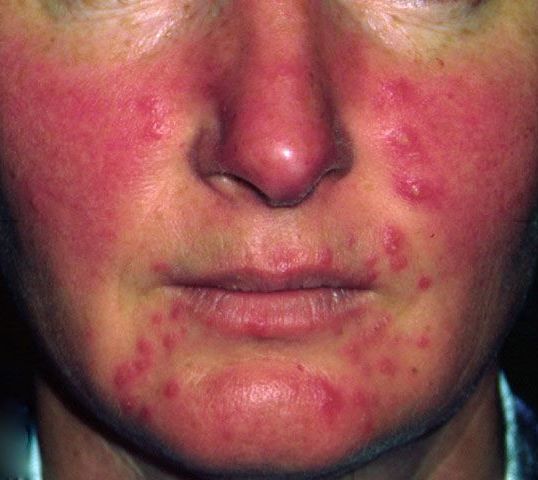
Rosacea is essentially redness caused by breaking capillaries, (couperose skin) but present as a chronic condition. Usually we see rosacea on the cheeks, and sometimes on the nose. Sometimes this redness can be accompanied by postules and blemishes. these can be quite sensitive and painful. For topical treatment, we must remember to shield the face from exposure to wind, sun, and extreme temperatures (hot or cold). This also applies to daily cleansing - ABSOLUTELY no hot showers, hot baths or steaming the face. A knowledgeable esthetician will not use a steamer on her couperose client. 

I don't recommend using acids, or products containing alcohol for cleansing the face. These particular products dry out the face, and tighten it, when our goal is to moisturize and nourish. Avoid using scrub to exfoliate the face - only light enzymatic masks are OK. The perfect mask for the rosacea client is SAIAN Enzyme Mask - it cools down the redness, and effectively cleans and brightens the face. This product has received praise from skin care professionals worldwide for its amazing rosacea results. 

The most important step in rosacea care is moisturizing - first step is to apply SAIAN® Pure Hyaluronic Acid Serum, and second step is to apply SAIAN® Hyaluronic Acid Creme. Hyaluronic acid is not the acid that burns and dries the skin (like AHA, Glycolic, Salicylic, Lactic, Pyruvic, Mandelic, Kojic)  but one that soothes and hydrates. Hyaluronic acid is the base of most facial fillers such as Restylane® and JUVÉDERM®. It has amazing anti-aging properties, as well! 

To complete the daily skincare regimen, the rosacea patient needs to use sunscreen daily. I repeat, DAILY. This is regardless of season, since the sun shines on us every day of the year. I recommend SAIAN® Sunscreen Mist SPF 29, and SAIAN® Green Tea Sunblock SPF 30  both of which are non-comedogenic, and non-toxic. Remember to choose a sunscreen, such as these, with physical blocks like Zinc and Titanium dioxide, as opposed to chemicals which will enter the bloodstream and cause long-term damage in the long run.

As for internal treatment, the best way to reduce flare-ups is by avoiding all hot and spicy foods that cause the rush of blood to the face, breaking more capillaries. It may seem like a hard task to some people, but it will be much harder trying to camouflage the redness from day to day with cake make-up. There is nothing better than the freedom of letting your skin breethe without make-up!

Hopefully this post has been of help.
If this is a problem you have been struggling with, I'd like you try these simple suggestions, and document your progress!

Tuesday, March 20, 2012

"Mis" - Treatments

Last night I had a body-scrub and massage at one of my favorite LA spas, but this time (strangely enough) the experience wasn't as pleasant as usual. High-end spas usually charge top-dollar for body treatments, and employ well-qualified, seasoned, experienced massage and bodywork specialists. One assumes that the personnel of more opulent spas is better than the average... but sometimes massage technicians make simple mistakes that are very easily caught by a professional, such as yours truly. 

I have noticed that it is becoming harder and harder for me to receive treatments, the more knowledgeable I become - i.e. it is hard to fall asleep during a facial massage, because I am aware of all the wrong movements. Here are some obvious no-no's therapists can commit, which make them look unprofessional, and make the treatment a lot more "Ugh" than "Omm".

1. Engaging in conversation is always discouraged, unless the client starts talking herself. Most of us come to receive a facial, or a body treatment to relax and unwind, so the last thing we want to do is talk. I absolutely do not feel like explaining to a stranger what I do for a living, do I have a boyfriend or not, etc.

2. Sanitation, sanitation, sanitation! This is the most important, and sacred of all spa routines. Your therapist needs to change linens between clients, disinfect all implements (in a proper State-Board approved manner), and keep the room tidy. Disposables need to be thrown away after every use (duh!) and that includes those body-scrubbing mitts they use to polish the body. I always make sure to request a new scrubbing mitt, or I don't get the service. It costs the spa less than $1, so it is really not that big of a deal, and they better not complain to you when you request it!

3. Speaking of mitts... I was shocked when the woman scrubbing me from the toes to neck (in that particular order) proceeded to use the same scrubbing mitt on my face! Here is just common knowledge everyone should be aware of when doing a full body scrub:
  • Use a new mitt for every client.
  • Start with the face, and only then do the rest of the body (imagine that the mitt has already been on the heels and toes of the feet... everywhere between the toes and the neck (um)... and then on the FACE!)
4.  Don't get beat up at a massage - I promise, it shouldn't hurt as bad as it does when an untrained therapist does it. A good massage therapist starts slowly and methodically working into the muscles, and doesn't initially pound and shake like a maniac. The woman doing my massage was jumping from one area to another, digging in with her fingers, making the experience very uncomfortable. A good technician will let the client know when to breathe out, to get a better stretch into the muscle, and ease tension. A good massage should have a logical pattern on the body - you should not lie there and be played like a xylophone! Not to mention double the discomfort when the woman massaging you doesn't have her fingernails trimmed short. No, thank you.

In short, there are many things which can go wrong and spoil your moment of relaxation, but once you have found a great masseuse, you will never have to worry! Personally, I am always on a quest for wonderful treatments - sometimes it is a hit, sometimes a miss, every time a learning experience!